W jednym zdaniu
Dobry model językowy jest dziś dobrem powszechnym — pytanie nie brzmi już, czy SI odpowie, lecz jak starannie. To właśnie tam, w rzekomych drobiazgach, powstaje różnica między „brzmi wiarygodnie" a „wytrzymuje weryfikację".
Ten sam model, inny wynik
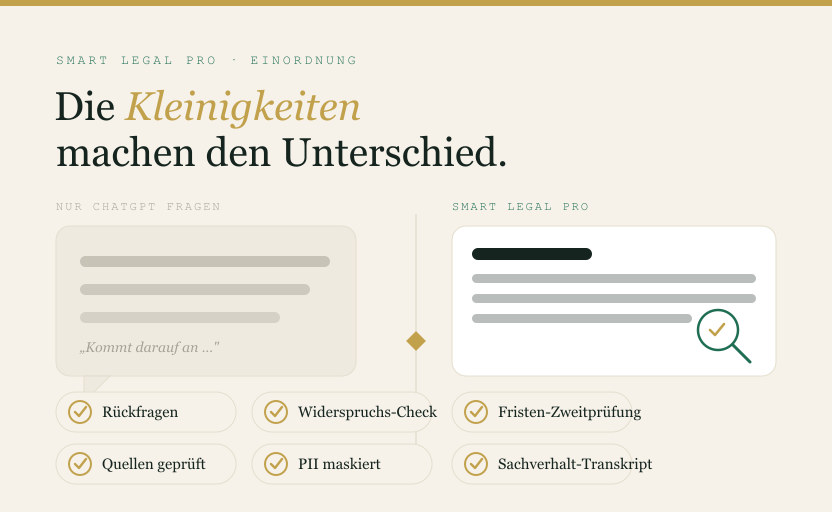
Smart Legal Pro korzysta z tej samej generacji dużych modeli językowych, którą zna Pan/Pani z ChatGPT. A mimo to otrzymuje Pan/Pani inny wynik — ponieważ wokół modelu istnieje prawnicze rzemiosło, którego zwykły czat nie ma. Sześć takich drobiazgów:
1. Najpierw pytać, potem odpowiadać
Osoby niebędące prawnikami często nie wiedzą, które informacje są rozstrzygające. Zwykły czat zaczyna wtedy beztrosko zgadywać. Nasz tryb prowadzony odwraca tę logikę: SI zadaje jedno pytanie po drugim, aż stan faktyczny będzie kompletny — a Pan/Pani może w każdej chwili sam(a) dopytać („Co to oznacza?", „Dlaczego to ważne?") albo szczerze odpowiedzieć „Nie wiem". To, co pozostaje niejasne, zostaje oznaczone jako punkt otwarty, zamiast zostać zmyślone.
2. Wykrywać sprzeczności, a nie je wygładzać
Mówi Pan/Pani najpierw „wypowiedzenie przyszło 3.", a później „pod koniec kwietnia" — uprzejmy czat przytaknie obu wersjom. Nasz wywiad zgłasza sprzeczność i prosi o wyjaśnienie, zanim powstanie z tego pismo. Drobiazg o dużym znaczeniu: stan faktyczny z wewnętrzną sprzecznością nie obroni się przed żadnym urzędem ani żadnym sądem.
3. Możliwość prześledzenia: stan faktyczny z pokwitowaniem
Z wywiadu powstaje uporządkowany stan faktyczny — wraz z transkrypcją. Widzi Pan/Pani (i może udostępnić swojemu adwokatowi lub swojej adwokat) jak zebrano fakty, łącznie z miejscami, w których miał(a) Pan/Pani wątpliwości. Historia czatu jest ulotna; tutaj sposób dojścia do wyniku jest jego częścią.
4. Źródła, które naprawdę istnieją
Modele językowe chętnie zmyślają sygnatury akt i przepisy. My oddzielamy to jasno: odpowiedzi standardowe nie wymyślają żadnych orzeczeń, a na życzenie uzupełniamy je o zweryfikowane źródła pierwotne — każdy link jest sprawdzany pod kątem dostępności, często z kopią archiwalną. Jeśli wyszukiwanie się nie powiedzie, dopłata zostaje Panu/Pani automatycznie zwrócona.
5. Pana/Pani dane pozostają Pana/Pani danymi
Zanim tekst trafi do modelu, maskujemy dane osobowe (nazwiska, adresy, sygnatury) i wstawiamy je z powrotem dopiero w gotowym wyniku. W otwartym oknie czatu dane Pana/Pani klientów trafiają natomiast bez ochrony do dostawcy.
6. Prawo nie wszędzie jest takie samo
Niemcy, Austria, Szwajcaria — i nie tylko — różnią się terminami, przepisami i sformułowaniami. Dzięki playbookom i ustalonym ramom prawnym SI otrzymuje właściwą podstawę zamiast niejasnej „niemieckojęzycznej" mieszanki. Drobiazg taki jak błędny termin może kosztować całą sprawę — dlatego w punktach krytycznych dochodzi dodatkowo druga weryfikacja terminów.
Pozostajemy szczerzy: my również jesteśmy SI
Żeby nie powstało błędne wrażenie: Smart Legal Pro jest narzędziem do analizy i redagowania, a nie adwokatem, i nie zastępuje weryfikacji przez prawnika. Nie chodzi o to, że „SI dobra, czat zły". Chodzi o staranność: ta sama technologia, ale z pytaniami doprecyzowującymi, kontrolą źródeł, ochroną danych i możliwością prześledzenia — z drobiazgami, które w prawie właśnie drobiazgami nie są. Jak to postrzegamy, przeczyta Pan/Pani w Dlaczego nie po prostu ChatGPT? oraz na stronie Przejrzystość SI.
Najszybciej przekonuje bezpośrednie porównanie: proszę zadać swoje kolejne pytanie raz w trybie prowadzonym pytań prawnych — i raz w zwykłym czacie.